Dreamelly: A Sweet Script for Web Design
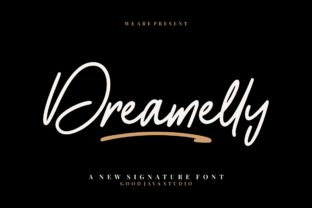
As a web designer, I’m always on the lookout for fonts that bring personality and charm to digital projects. Dreamelly has quickly become one of my go-to choices for adding a soft, elegant touch to website headers and branding elements.
A First Impression on a Hero Section
I first tested Dreamelly in a hero section for a boutique online store. The font’s flowing curves and gentle strokes gave the headline a warm, inviting feel. It worked especially well against a muted background, where it stood out without overwhelming the design. The subtle swashes and ligatures added just enough detail to make the text feel handcrafted and unique.
On mobile devices, Dreamelly maintained its clarity and legibility. Even at smaller sizes, the characters remained distinct and easy to read. This made it ideal for CTA buttons and short headlines that needed to grab attention without sacrificing style.
Using Dreamelly in a Landing Page
For a product landing page, I used Dreamelly as the main heading for a new line of handmade soaps. The font’s softness complemented the organic, natural theme of the brand. When paired with a clean sans serif for the body copy, it created a balanced visual hierarchy that felt both professional and approachable.
The font also performed well over image banners. Its light weight allowed it to sit nicely on top of busy backgrounds without clashing. I found that using a semi-transparent overlay helped maintain contrast while keeping the design cohesive.
Brand Identity and Logo Design
Dreamelly is a great choice for logo design when you want to convey a sense of creativity and warmth. I used it for a small business owner’s personal brand, and it brought a friendly, artistic vibe to their website. The font’s versatility allowed it to work across different platforms, from social media profiles to email newsletters.
When pairing Dreamelly with other fonts, I leaned toward a simple, modern sans serif for body text. This combination kept the design from feeling too ornate while still allowing the script font to shine in key areas like headings and callouts.
Responsive Design and Accessibility
One thing to keep in mind is that Dreamelly is best suited for display use rather than long paragraphs. On larger screens, it looked great in headers and subheadings, but on smaller devices, it required careful spacing to avoid looking cramped.
For accessibility, I recommend using Dreamelly in conjunction with a more readable font for navigation menus and form labels. It’s not ideal for dense text blocks or technical content, but as a decorative accent, it adds a nice touch to any site.
Font Pairing and Webfont Availability
Dreamelly comes in multiple weights and styles, which makes it adaptable for different design needs. I used the regular and bold versions for varying levels of emphasis, and they both worked well in different contexts.
When it came to webfont availability, I was happy to see that Dreamelly supported common file formats like WOFF and WOFF2. This made it easy to integrate into the site’s CSS and ensured fast loading times, which is essential for user experience.
For multilingual support, I didn’t run into any issues. The font handled Latin characters well, and the ligatures and alternates added a nice layer of sophistication to the text.
Final Thoughts on Digital Use
Dreamelly is a beautiful script font that brings a soft, charming energy to web design. Whether you’re working on a creative portfolio, an online store, or a digital brand kit, it can add a touch of elegance without being too flashy.
It’s perfect for headlines, logos, and short phrases where visual appeal matters most. Just be mindful of its limitations when it comes to long-form text or accessibility-heavy interfaces. With the right pairing and spacing, Dreamelly can elevate your website’s design and help create a memorable brand experience.